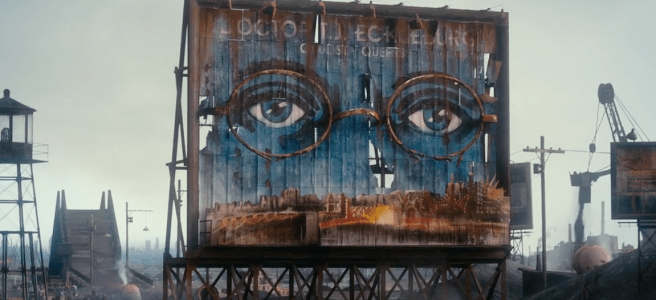
Old Sport

“So we beat on, boats against the current, borne back ceaselessly into the past”

I watched the most recent version of the film, The Great Gatsby, last week. I read the book in high school and viewed both versions of the movie multiple times. For some reason this viewing resonated with me in a way that hasn’t happened in the past. Maybe it’s because my boat has hit a section of very strong current recently and continuing to paddle through it, upstream and into the future, has proven exhausting. I’ve had to take a little break and the current has carried me back to the past, where I no longer wish to go.

Gatsby wants to escape the self-proclaimed label he identifies with and to be accepted by an affluent group of people. This acceptance, in his mind at least, will signify that he is worthy of Daisy’s love and affection. Success, adulation, and possessing Daisy will validate Gatsby’s desire to be something different than what his inner monologue suggests. The problem exists though in that nothing can supplant the identity burned into his subconscious, of not being good enough, and he loses himself, yet again, to the selfish impulses of the one he falsely believes can provide salvation.

Damn can I relate to that. It’s been written about in previous posts and I won’t go to great lengths to rehash it all now. Currently I’m reading a book called Unbroken Brain, by Maia Szalavitz, about addiction. In it, she talks about the root of the majority of addictions being maladaptive coping mechanisms to trauma and extreme stress in childhood. For the author, her trauma came from believing at a very young age that something was fundamentally wrong with her. This may be a common core belief for many addicts and alcoholics and it certainly was with me.

Several months after my father left my mother for another woman (we’ll call her P), it was my father’s weekend to have us children. Mom left the house and dad came to stay with us. It had happened this way before and I kind of liked having him all to ourselves versus absorbing the negative radiation of the strained relationship when mom and dad were both together. This time, however, dad informed me that P would be spending the weekend too.

I was furious! How dare he bring her to OUR house. I had never met P before and my 11 year old mind was still desperately hoping that mom and dad would reconcile. She came over and I retreated to my room. Proudly displayed on my dresser and shelves were all the things that my father had given me and which I loved: the Dairy Queen football helmets of every NFL team at the time, the autographed baseball in it’s display case, the Hardy Boys books that I collected, my Empire Strikes Back Snowspeeder, and my framed picture of me with my mom, dad, and sisters.

I took all those items and proceeded to tear, break, and otherwise destroy them as best I could, leaving the mess piled upon my bed. I wanted dad to know how upset I was and given that the parental modeling of emotion to that point consisted solely of flash displays of rage, that’s the only way I knew how to express it.

I called my dad into my room so he could see what I had done. He walked into the doorway, shook his head in disgust, then called for P to come in there. She entered without a word, saw the pile of debris that had moments ago been my proudest possessions and listened to my dad say,”look what a great son I have”. He walked out, closing the door behind him, and I fell into a sobbing, convulsing heap on the floor. For two hours I lay next to my bed in the fetal position, trying occasionally to get up, though every time I did my senses were assaulted by the broken items centered on my carefully made up bed.

Upon forcing myself to look at the mess, I would fall back on the floor with thoughts of despair racing through my head. How could I have done that to my father? What did P think of me? And most significant of all, “How could I have done this to the most important possessions that I owned?” Adding to the intrinsic value was the symbolism behind them. My dad and I spent several months dutifully going to Dairy Queen when new helmets came out and we would carefully apply the stickers that signified, along with the color, which team they belonged to. There were two model airplanes that I destroyed and I remember the time we spent at the kitchen table putting them together.

What kind of a monster would do this?

I seriously thought from that point on that something evil was inside me and things never felt the same after. Once the initial shock of what I had done subsided, I next had to go through the process of deciding if anything was salvageable and throwing away things that were not. Most of it had to be thrown away and even seeing the damaged items on display again brought back the shame and despair; eventually it all was designated as trash and placed in the container for things unwanted. Then I was left with barren shelves, a barren dresser, and a barren outlook on what life held for me. No one talked to me about any of this, consoled me, or helped with fixing or disposing of things; my 11 year old brain was left to its own devices.

The funny thing is my father doesn’t even remember this and I’ve been battling against the current of that river my entire life. I was Gatsby and I tried to gain all the material possessions so that S could see what a successful person I was and be proud of me and happy to be married to me.

Even her love wasn’t enough to escape the nagging, disgusted voice of my soul. Look what a great husband you are. Look what a great father you are. Look what a worthless piece of shit you are.

“And as I sat there brooding on the old, unknown world, I thought of Gatsby’s wonder when he first picked out the green light at the end of Daisy’s dock. He had come a long way to this blue lawn and his dream must have seemed so close that he could hardly fail to grasp it. He did not know that it was already behind him, somewhere back in that vast obscurity beyond the city, where the dark fields of the republic rolled on under the night. 

Gatsby believed in the green light, the orgastic future that year by year recedes before us. It eluded us then, but that’s no matter—tomorrow we will run faster, stretch out our arms farther. . . . And one fine morning——

So we beat on, boats against the current, borne back ceaselessly into the past.”
Opaque

So here it is a Saturday afternoon. It’s cold outside, we had our first snowfall yesterday, and Thanksgiving is next week. Typically these are the darkest days of the year for me, both literally and figuratively.

In the literal sense, well… that should be self-explanatory. I can’t say with certainty that I have seasonal affective disorder but the symptoms which develop this time of year are similar. Generally, I feel depressed and anxious. More specifically, there is a sense of hopelessness and foreboding.

However, it is possible that darker days correlate to the upcoming holiday season, which unfortunately has more often than not been experienced as a burden rather than a joyous time to spend with family and friends. My earliest memories recollect Thanksgiving and Christmas spent at my grandparents, with all my aunts and cousins there. Food, drinks, and laughter abounded. The children, including myself, were constantly in motion, building blanket forts in the basement and playing indoor tag, much to the chagrin of the adults. These were categorically happy times…

After moving to the suburban city at age 10 and the subsequent divorce of my parents, things changed. A pall was cast over those happy memories. Dad was no longer at my grandparents and a different format for “celebrating” the holidays ensued. Instead of unity there was division and I began to learn that expectations for behavior, and by extension my personality, changed according to the venue and the people in it.

With the addition of new romantic partners for each parent and their extended families, some years required four different “celebrations”; I only wanted one, that which I already knew and loved. Dad and P had a very formal, please and thank you, Christmas. Mom and B had a drunkfest and B’s family had a combination drunkfest / please and thank you Christmas. We would still go to my grandparents’ home in rural Minnesota where I felt most comfortable but the naive innocence of my young life was gone, though the complexity of that reality was not consciously understood. All I knew was that I didn’t feel as though I could be me; I tried to conform to what others wanted me to be.

As distress over the loss of family stability began to manifest in chemical use, poor school performance, and legal trouble, the feelings of identity alienation became more apparent when contrasting experiences from each distinct and separate family unit. I compensated by trying to conform even more to what others wanted of me. By the time I reached adulthood, the coming holiday season would bring dread along with it.

There have been periods where the opposite was true, most notably when I was married and my daughter was younger. In those times a feeling of being connected and a sense of patriarchal duties gave the holidays meaning, though my identity was still based on falsehoods and was built as a means to protect my soft and sensitive inner core. In those years I felt others viewed me as a success and I felt accepted, even if I didn’t accept myself.

The loss of everything that held up the facade including my ex-wife, business success, money, and possessions, has left bare what was underneath. But that is the best thing that could ever have happened. I shudder to think what the next 40 years may have looked like had the pain experienced not jolted me towards spiritual redemption. All I can do now is be honest and show myself for what I am. And just what I am, I am truly learning for the first time. Great fear existed for what I might find underneath the facade because of the illusion believed by using other people as a mirror of my soul.

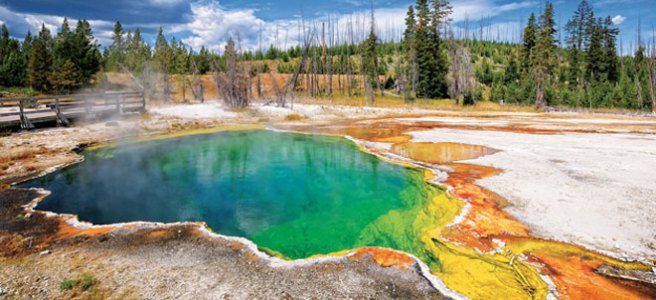
It’s like standing at the edge of an opaque pool of liquid near a volcanic hotspot. You don’t know how deep it is, what temperature it is, the poisons that might be hidden in it’s chemical structure, whether the bottom is soft sand or sharp rocks, or what demonic creatures might be lurking within. At first you gingerly stick a toe in to test the temperature and make sure there is no reaction on your skin. Next, you place your foot in to test whether the bottom is sound. Gradually you begin to submerge your entire body, the pace of which accelerates as you grow more comfortable believing nothing bad will happen. Exploring first the edges of the pool, keeping your head just above in order to breath, the point comes when you are no longer touching bottom and, finding yourself in the middle of it, your eyes fervently dart around to find an easy escape route in case it were needed. Faith grows to the point that curiosity and excitement outweigh fear and you dive below the surface, feeling light and free as you are unsure which direction you are going but just knowing, knowing, that it feels right.

Either that or you accidentally fall in like the guy at Yellowstone, and the boiling hot, acidic water eats away everything but your clothes. Poor guy…

Levity.


Musings

I really don’t have anyone following me but on the chance that someone does read this or other recent posts, it would be easy to assume that my view of the world is pessimistic. This is not the case. Currently there are many issues that I am dealing with, and writing during this process will hopefully be cathartic. Professionals say there is a lot of unresolved grief and I’ve been working really hard on getting it to the surface and expressing it to hopefully move on to bigger and better things.

Twenty years ago I had a plan for my life. Unfortunately (or fortunately, maybe?) life had its own plan. My twenty year plan included success, money, marriage, more children, and exploring the world through travel and cultural experience.

Over the last two decades I achieved many of those objectives but the path has proven anything but linear and previous ideas of success and life exploration have followed a different paradigm. I enjoyed success in two different and substantial careers, real estate and money management, that allowed for a high degree of material possession and personal freedom. I fell in love and got married. I went to college as an older student and obtained a degree from a tier 1 business school.

I felt successful in the typical western sense. But none of this brought internal peace and contentment. Every individual goal that was achieved was never enough and the stakes kept getting greater and greater as I pursued the elusive carrot on the stick, always in sight but never quite able to get there. The reward sought was acceptance of who I was internally and what I perceived others wanted me to be.

From 2003 through 2007 I was sober. Sober as in not using mood-altering chemicals but not sober in the sense of recovery from the pattern of thinking which caused chemical seeking behavior. The booze and drugs had been replaced with success. I would get jazzed on reaching a goal but that hole in my soul still couldn’t be filled. My wife and material possessions conveyed a sense of accomplishment to the outside world. If other people thought I was doing well then that internal semi-conscious monologue of personal contempt and loathing was silenced, even if it still remained below the surface like the San Andreas fault, ready to devour the good life in California when the friction became too great.

The Great Recession was my earthquake. The large house was a symbol, and as the ability to sustain the cultivated lifestyle of success began to erode with our dwindling incomes, cracks in the marriage widened. She was beautiful, inside and out, and I never felt like I deserved her. With a half real, half made-up back injury in 2007, my chemical addiction was off and running again through prescribed opiates.

At first she wasn’t aware. It took nearly one and one-half years before she found a pill bottle and it was another one and one-half years later before she finally had enough. There were several ultimatums during that period and somehow it was believed that she wouldn’t really leave. When the last ultimatum was presented, either go to treatment or move out, I knew it was serious. But delusional thinking had me believe that those two choices were of equal weight in her eyes. She really wanted me to go to treatment and had I done so, maybe it would have shown that for once, her hopes, dreams, and wishes could be placed in the primary position of our life together. My need to support the facade created against the world had been the most important objective to that point and the decision to move out rather than acquiesce to her demand was just another attempt at wanting to maintain my “position”, regardless of the position I really held.

It turns out that everyone knew then what I was struggling against. When she said she wanted a divorce six weeks later, I ran to her father thinking that his religious conservatism would somehow prevent her from making a terrible mistake. Little did I know that he encouraged her to leave. Words he told me the day we met, the last conversation I’ve ever had with him, stung me to the core. I had already lost her respect and now I was losing her.

Things spiraled out of control after that. She was gone, the house was gone, eventually I lost my job and the money was gone. I spent several lost years pursuing relationships devoid of meaning and in jobs that corrupted my morals and sapped my motivation. It took a DUI a little more than a year ago to finally embrace the idea that everything needed to change, including what was happening internally. It isn’t to say that change was resisted. In fact, I had been dabbling around the shores of change without diving into the middle of it.

True change only seems possible by going well outside the comfort zone and protective shield of the external facade. In other words, only by a willingness to be vulnerable to others. For me that means acknowledging faults and failures and allowing others, as human beings, to make their own mistakes without judging them. It means letting my innate sensitivity out as a strength rather than perceive it as a weakness when expressing emotion to others. And it means grieving the loss in my life.

I loved my wife and I’m sad she’s gone. I love my mother but am sad she never took interest in me or my daughter. I’m sad for the multitude of lost opportunities of love, happiness, and fulfillment in this life.

Fear has been the single greatest motivator of action thus far. I am scared that the pattern of loss is now ingrained in my psyche to the extent that it is subconsciously recreated over and over again. Mortality is in sight and it seems time is running out. Can I salvage what’s left and change the pattern? Can the fear of lying on my deathbed in ten, twenty, or thirty years with massive regret supersede the fear of being hurt today or tomorrow?


The Start of My Disease

I talked in a previous post about my first experience with a chemical substance at age 12. It happened to be alcohol but it could have been anything. The way it made me feel and the relief it provided is universal across the chemical spectrum. When I look back, almost 30 years ago, it is so readily apparent how life changed at that moment. The coping mechanism available was more powerful than anything else learned from parents and teachers and it took hold in a way that causes me to shudder when I think back on it.

It’s not like there was an immediate transformation into daily use, rather, it was an evolution that took place over the next four years. During that period, puberty and all the associated hormonal brain changes kicked in while at the same time the total consequences of my parents’divorce became apparent.

I felt abandoned by my father. He left our family, which included my mother and us three siblings, for P and her three children. We moved out of the house we all shared so P and her three children could move in. I went from sleeping in my own room one weekend to sleeping on some strange couch in the living the next. There was now another person occupying my room and the entire house had different furniture and even a different smell. We had to get rid of our cat, who I loved, because P had a cat and the two didn’t get along. It was really shitty.

The foundation for maladaptation was set from the moment I was born. With an alcoholic mother and a father who was the youngest of twelve children, meaning he never learned how to nurture from his own parents, I was left to my own devices directly out of the womb. Stories circulate among my extended family of the temper tantrums they experienced when I was very young. This was a symptom of an inability to self-regulate and a simulation of the one emotion that was freely expressed around the household, anger. The lessons of discipline and perseverance in the pursuit of intrinsically motivating activities were never taught, and this was and still is a key factor in the lost opportunities of my life.

I was identified as highly intelligent at a very young age and excelled at school until the affect of the divorce had driven me to believe there was something fundamentally wrong with me. When I discovered marijuana at the age of fourteen my ability and desire to escape was propelled to a new level. When I was high, the knot in my stomach went away and I felt light and could fantasize about good things happening: falling in love, making money, liking my appearance. Without drugs, insecurity and shame prevailed and kept me isolated behind a wall devoid of human connection.

Besides intelligence, I also have the physical stature of an athlete. I was told often of the “potential” (I now hate hearing that word) I possessed in academics and athletics. The expectation was there for me to excel at football and the chance was given to me in the 10th grade to start on the defensive line. While I possessed the physical attributes, my insecurity and inability to regulate emotion would not allow me to channel aggression in the way that football demanded. I was demoted to an average player and in my senior year, was kicked off the team after missing the first two games because of a DUI in my junior year, playing two games, then getting arrested for drinking beer at the festival where I worked.

At that point I entered a group home because my father was disgusted and wanted me out of his house. After completing juvenile treatment in the summer and coming to live with him to escape the alcoholic household of my mother, it was maybe six weeks before I relapsed. The shame of being a “groupie”, as they were known around high school, was immense. My chemical use slowed down while in the group home, not because I wanted to but because if caught, the level of consequence began to increase dramatically to the point that incarceration was a possibility.

That fall the US Marine recruiters visited the school. Feeling so ashamed, military service seemed to be a shot at redemption and in my eyes, the Marines were a caliber above the other branches. The day after my 18th birthday I enlisted under the delayed entry program and scored a 98 on my entrance exam. Once again, I was told how smart I was and that I could do anything. Shortly after my birthday I moved out of the group home. Though it would have been possible to remain until high school graduation, I was an adult and off juvenile probation. The short-term benefit of shame reduction outweighed the obviously more important long-term benefit of graduation.

After moving into my own apartment, T came into the picture. I never had a girlfriend before and was a virgin. Now the attention and affection of a female, which was never received from mom, took on great significance in my decision making. The drug and alcohol use returned unfettered after the reigns of the group home were removed and this certainly clouded judgement as well.

Scheduled to ship out that August after graduation, the decision was made that four years of military service wasn’t worth missing what I thought were going to be the most fun four years of my life in the small, suburban city where I grew up. In hindsight, this rationale behind that decision brings incredulity and significant regret. I was able to get out of my commitment to the Marine Corps by stating that A) I did not want to go and B) I was a daily pot smoker and was unfit for military service.

Little did I know that the consequences from my disease were just beginning.

Today is This Day

In a few days I will have been sober for an entire year! Not just sober, but in active recovery, and there is a difference.

To be sober merely means that one abstains from any psychoactive substance. To me, active recovery is about changing how you think and view the world. I’m not speaking within the strict confines of the standard twelve step program; rather, it is really about a humanistic approach of trying new behaviors and consciously altering my perspective on experiences while not letting emotional baggage predetermine outcomes. I’ll try to explain in practical terms below.

For me, one of life’s major paradoxes exists between the craving for human interaction and, at the same time, a great fear of it. My parents weren’t very good at being parents (more on that later) and an underlying feeling of being “rogue” developed at an early age; something seemed fundamentally wrong with me. I know now that this basic identity was formed through negative comments made by my parents and a lack of any positive reinforcement for things that made me unique and special. Every child wants to know that their parents value and support them. My world at the age of 8 consisted of a 10 mile radius and mom and dad were demigods: rulers, providers, often angry and able to crush or raise my spirit with a look, word, or voice inflection.

If positive affirmation isn’t provided to the child by the parents, then the child looks to find that in other ways. In fact, as every marketing professional knows, adults do the same thing. If you drive this kind of car or drink this type of beer, you will be sexy and more lovable! Extrinsic value as perceived by others becomes more important, and much more fragile, than intrinsic worth. My reinforcements regarding positive human value came from MTV, the observation of friends and the relationships they had with their parents, and of course, how I felt about myself while in the midst of different experiences.

One afternoon, after my parents Great Divorce had begun, I was at my dad’s apartment watching a cowboy show on TV. These tough characters, with the pretty and adoring wives and girlfriends, were up at the bar drinking whiskey. After being bullied at school and not feeling confident at all around other kids, I wanted to be tough. I used to watch Popeye cartoons and he ate spinach, so one day I tried spinach. When the movie Rocky came out the scene where he drank the raw egg encouraged me to try drinking a raw egg. It seemed perfectly logical to try liquor.

Dad was at work so I searched his cupboards for a shot glass like the cowboys were using. Not finding any, I took the smallest cup he had and filled it with vodka. My mother drank a lot of vodka so I figured I could start with that and be safe. I drank it fast like the cowboys did and 5 minutes later, I was in an entirely different, entirely glorious dimension.

The fear and anxiety I felt that day (more on the reasons for that later) went away, the sun seemed brighter, my chest felt lighter, my damning self-consciousness went away, and to summarize it all in one word, I was… excruciatingly happy.

(I use the term excruciating because it was painful in a way that I couldn’t understand or explain then. The word just came to me and I wrote it. I’ll have to think more on that and see if other ideas surrounding it come up.)

If a little bit did that much imagine what more would bring! I poured another glass. After 10 more minutes complete numbness set in. That wasn’t as enjoyable as the euphoria but there was something soothing in this new feeling. I wanted to get back to the euphoria so maybe I needed to drink more. I picked up the vodka bottle a took a few swigs. The euphoria didn’t return but the vodka went down, and eventually it came back up.

So that was the first experience, at age 11 mind you, with a mood-altering chemical. It was a love affair which continued for 30 years. No matter the fear, anxiety, or depression felt, booze and drugs would always make it better. That relationship left in its path divorce, financial ruin, a criminal record, emotional abuse, and this overwhelming sense of failure, worthlessness, and hopelessness. I knew deep down I wanted more out of life and that I was deserving and capable of love and happiness. Recovery has meant changing the automatic responses to life experiences. It isn’t something that takes place over a few months or a year and then you’re done. It’s lifelong and a process every person  goes through provided they aren’t substituting something like addiction for emotional growth. After addiction, I’m trying to play catch-up and relearning things I should have learned 30 years ago. It can be really, really painful sometimes.

Gotta run! Haven’t proofed this so forgive any errors!