Opaque

So here it is a Saturday afternoon. It’s cold outside, we had our first snowfall yesterday, and Thanksgiving is next week. Typically these are the darkest days of the year for me, both literally and figuratively.

In the literal sense, well… that should be self-explanatory. I can’t say with certainty that I have seasonal affective disorder but the symptoms which develop this time of year are similar. Generally, I feel depressed and anxious. More specifically, there is a sense of hopelessness and foreboding.

However, it is possible that darker days correlate to the upcoming holiday season, which unfortunately has more often than not been experienced as a burden rather than a joyous time to spend with family and friends. My earliest memories recollect Thanksgiving and Christmas spent at my grandparents, with all my aunts and cousins there. Food, drinks, and laughter abounded. The children, including myself, were constantly in motion, building blanket forts in the basement and playing indoor tag, much to the chagrin of the adults. These were categorically happy times…

After moving to the suburban city at age 10 and the subsequent divorce of my parents, things changed. A pall was cast over those happy memories. Dad was no longer at my grandparents and a different format for “celebrating” the holidays ensued. Instead of unity there was division and I began to learn that expectations for behavior, and by extension my personality, changed according to the venue and the people in it.

With the addition of new romantic partners for each parent and their extended families, some years required four different “celebrations”; I only wanted one, that which I already knew and loved. Dad and P had a very formal, please and thank you, Christmas. Mom and B had a drunkfest and B’s family had a combination drunkfest / please and thank you Christmas. We would still go to my grandparents’ home in rural Minnesota where I felt most comfortable but the naive innocence of my young life was gone, though the complexity of that reality was not consciously understood. All I knew was that I didn’t feel as though I could be me; I tried to conform to what others wanted me to be.

As distress over the loss of family stability began to manifest in chemical use, poor school performance, and legal trouble, the feelings of identity alienation became more apparent when contrasting experiences from each distinct and separate family unit. I compensated by trying to conform even more to what others wanted of me. By the time I reached adulthood, the coming holiday season would bring dread along with it.

There have been periods where the opposite was true, most notably when I was married and my daughter was younger. In those times a feeling of being connected and a sense of patriarchal duties gave the holidays meaning, though my identity was still based on falsehoods and was built as a means to protect my soft and sensitive inner core. In those years I felt others viewed me as a success and I felt accepted, even if I didn’t accept myself.

The loss of everything that held up the facade including my ex-wife, business success, money, and possessions, has left bare what was underneath. But that is the best thing that could ever have happened. I shudder to think what the next 40 years may have looked like had the pain experienced not jolted me towards spiritual redemption. All I can do now is be honest and show myself for what I am. And just what I am, I am truly learning for the first time. Great fear existed for what I might find underneath the facade because of the illusion believed by using other people as a mirror of my soul.

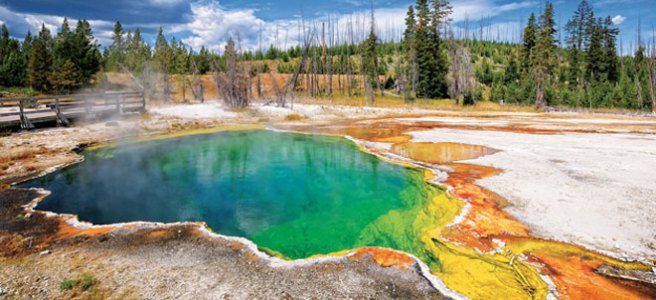
It’s like standing at the edge of an opaque pool of liquid near a volcanic hotspot. You don’t know how deep it is, what temperature it is, the poisons that might be hidden in it’s chemical structure, whether the bottom is soft sand or sharp rocks, or what demonic creatures might be lurking within. At first you gingerly stick a toe in to test the temperature and make sure there is no reaction on your skin. Next, you place your foot in to test whether the bottom is sound. Gradually you begin to submerge your entire body, the pace of which accelerates as you grow more comfortable believing nothing bad will happen. Exploring first the edges of the pool, keeping your head just above in order to breath, the point comes when you are no longer touching bottom and, finding yourself in the middle of it, your eyes fervently dart around to find an easy escape route in case it were needed. Faith grows to the point that curiosity and excitement outweigh fear and you dive below the surface, feeling light and free as you are unsure which direction you are going but just knowing, knowing, that it feels right.

Either that or you accidentally fall in like the guy at Yellowstone, and the boiling hot, acidic water eats away everything but your clothes. Poor guy…

Levity.
 

Musings

I really don’t have anyone following me but on the chance that someone does read this or other recent posts, it would be easy to assume that my view of the world is pessimistic. This is not the case. Currently there are many issues that I am dealing with, and writing during this process will hopefully be cathartic. Professionals say there is a lot of unresolved grief and I’ve been working really hard on getting it to the surface and expressing it to hopefully move on to bigger and better things.

Twenty years ago I had a plan for my life. Unfortunately (or fortunately, maybe?) life had its own plan. My twenty year plan included success, money, marriage, more children, and exploring the world through travel and cultural experience.

Over the last two decades I achieved many of those objectives but the path has proven anything but linear and previous ideas of success and life exploration have followed a different paradigm. I enjoyed success in two different and substantial careers, real estate and money management, that allowed for a high degree of material possession and personal freedom. I fell in love and got married. I went to college as an older student and obtained a degree from a tier 1 business school.

I felt successful in the typical western sense. But none of this brought internal peace and contentment. Every individual goal that was achieved was never enough and the stakes kept getting greater and greater as I pursued the elusive carrot on the stick, always in sight but never quite able to get there. The reward sought was acceptance of who I was internally and what I perceived others wanted me to be.

From 2003 through 2007 I was sober. Sober as in not using mood-altering chemicals but not sober in the sense of recovery from the pattern of thinking which caused chemical seeking behavior. The booze and drugs had been replaced with success. I would get jazzed on reaching a goal but that hole in my soul still couldn’t be filled. My wife and material possessions conveyed a sense of accomplishment to the outside world. If other people thought I was doing well then that internal semi-conscious monologue of personal contempt and loathing was silenced, even if it still remained below the surface like the San Andreas fault, ready to devour the good life in California when the friction became too great.

The Great Recession was my earthquake. The large house was a symbol, and as the ability to sustain the cultivated lifestyle of success began to erode with our dwindling incomes, cracks in the marriage widened. She was beautiful, inside and out, and I never felt like I deserved her. With a half real, half made-up back injury in 2007, my chemical addiction was off and running again through prescribed opiates.

At first she wasn’t aware. It took nearly one and one-half years before she found a pill bottle and it was another one and one-half years later before she finally had enough. There were several ultimatums during that period and somehow it was believed that she wouldn’t really leave. When the last ultimatum was presented, either go to treatment or move out, I knew it was serious. But delusional thinking had me believe that those two choices were of equal weight in her eyes. She really wanted me to go to treatment and had I done so, maybe it would have shown that for once, her hopes, dreams, and wishes could be placed in the primary position of our life together. My need to support the facade created against the world had been the most important objective to that point and the decision to move out rather than acquiesce to her demand was just another attempt at wanting to maintain my “position”, regardless of the position I really held.

It turns out that everyone knew then what I was struggling against. When she said she wanted a divorce six weeks later, I ran to her father thinking that his religious conservatism would somehow prevent her from making a terrible mistake. Little did I know that he encouraged her to leave. Words he told me the day we met, the last conversation I’ve ever had with him, stung me to the core. I had already lost her respect and now I was losing her.

Things spiraled out of control after that. She was gone, the house was gone, eventually I lost my job and the money was gone. I spent several lost years pursuing relationships devoid of meaning and in jobs that corrupted my morals and sapped my motivation. It took a DUI a little more than a year ago to finally embrace the idea that everything needed to change, including what was happening internally. It isn’t to say that change was resisted. In fact, I had been dabbling around the shores of change without diving into the middle of it.

True change only seems possible by going well outside the comfort zone and protective shield of the external facade. In other words, only by a willingness to be vulnerable to others. For me that means acknowledging faults and failures and allowing others, as human beings, to make their own mistakes without judging them. It means letting my innate sensitivity out as a strength rather than perceive it as a weakness when expressing emotion to others. And it means grieving the loss in my life.

I loved my wife and I’m sad she’s gone. I love my mother but am sad she never took interest in me or my daughter. I’m sad for the multitude of lost opportunities of love, happiness, and fulfillment in this life.

Fear has been the single greatest motivator of action thus far. I am scared that the pattern of loss is now ingrained in my psyche to the extent that it is subconsciously recreated over and over again. Mortality is in sight and it seems time is running out. Can I salvage what’s left and change the pattern? Can the fear of lying on my deathbed in ten, twenty, or thirty years with massive regret supersede the fear of being hurt today or tomorrow?


The Start of My Disease

I talked in a previous post about my first experience with a chemical substance at age 12. It happened to be alcohol but it could have been anything. The way it made me feel and the relief it provided is universal across the chemical spectrum. When I look back, almost 30 years ago, it is so readily apparent how life changed at that moment. The coping mechanism available was more powerful than anything else learned from parents and teachers and it took hold in a way that causes me to shudder when I think back on it.

It’s not like there was an immediate transformation into daily use, rather, it was an evolution that took place over the next four years. During that period, puberty and all the associated hormonal brain changes kicked in while at the same time the total consequences of my parents’divorce became apparent.

I felt abandoned by my father. He left our family, which included my mother and us three siblings, for P and her three children. We moved out of the house we all shared so P and her three children could move in. I went from sleeping in my own room one weekend to sleeping on some strange couch in the living the next. There was now another person occupying my room and the entire house had different furniture and even a different smell. We had to get rid of our cat, who I loved, because P had a cat and the two didn’t get along. It was really shitty.

The foundation for maladaptation was set from the moment I was born. With an alcoholic mother and a father who was the youngest of twelve children, meaning he never learned how to nurture from his own parents, I was left to my own devices directly out of the womb. Stories circulate among my extended family of the temper tantrums they experienced when I was very young. This was a symptom of an inability to self-regulate and a simulation of the one emotion that was freely expressed around the household, anger. The lessons of discipline and perseverance in the pursuit of intrinsically motivating activities were never taught, and this was and still is a key factor in the lost opportunities of my life.

I was identified as highly intelligent at a very young age and excelled at school until the affect of the divorce had driven me to believe there was something fundamentally wrong with me. When I discovered marijuana at the age of fourteen my ability and desire to escape was propelled to a new level. When I was high, the knot in my stomach went away and I felt light and could fantasize about good things happening: falling in love, making money, liking my appearance. Without drugs, insecurity and shame prevailed and kept me isolated behind a wall devoid of human connection.

Besides intelligence, I also have the physical stature of an athlete. I was told often of the “potential” (I now hate hearing that word) I possessed in academics and athletics. The expectation was there for me to excel at football and the chance was given to me in the 10th grade to start on the defensive line. While I possessed the physical attributes, my insecurity and inability to regulate emotion would not allow me to channel aggression in the way that football demanded. I was demoted to an average player and in my senior year, was kicked off the team after missing the first two games because of a DUI in my junior year, playing two games, then getting arrested for drinking beer at the festival where I worked.

At that point I entered a group home because my father was disgusted and wanted me out of his house. After completing juvenile treatment in the summer and coming to live with him to escape the alcoholic household of my mother, it was maybe six weeks before I relapsed. The shame of being a “groupie”, as they were known around high school, was immense. My chemical use slowed down while in the group home, not because I wanted to but because if caught, the level of consequence began to increase dramatically to the point that incarceration was a possibility.

That fall the US Marine recruiters visited the school. Feeling so ashamed, military service seemed to be a shot at redemption and in my eyes, the Marines were a caliber above the other branches. The day after my 18th birthday I enlisted under the delayed entry program and scored a 98 on my entrance exam. Once again, I was told how smart I was and that I could do anything. Shortly after my birthday I moved out of the group home. Though it would have been possible to remain until high school graduation, I was an adult and off juvenile probation. The short-term benefit of shame reduction outweighed the obviously more important long-term benefit of graduation.

After moving into my own apartment, T came into the picture. I never had a girlfriend before and was a virgin. Now the attention and affection of a female, which was never received from mom, took on great significance in my decision making. The drug and alcohol use returned unfettered after the reigns of the group home were removed and this certainly clouded judgement as well.

Scheduled to ship out that August after graduation, the decision was made that four years of military service wasn’t worth missing what I thought were going to be the most fun four years of my life in the small, suburban city where I grew up. In hindsight, this rationale behind that decision brings incredulity and significant regret. I was able to get out of my commitment to the Marine Corps by stating that A) I did not want to go and B) I was a daily pot smoker and was unfit for military service.

Little did I know that the consequences from my disease were just beginning.

Free Write

My mood is down. Many things are occupying my mental capacity and they include this “search for fulfillment” that I am on, my mother’s alcoholism and our attempts to help her and my own recovery process. There is also the unbelievable results of this election; I am really beside myself wondering how so many people think Donald-fucking-Trump is the best person to lead the most powerful country in the world.

I had a meeting with E on Monday. I had been working it up in my mind as the career breakthrough that I’d been waiting and longing for. I started the meeting with a synopsis (that I had practiced delivering beforehand) of what I was doing and why I was there. After my 5 minute introduction he started by saying he didn’t think I needed to do that and that Christ led him and the answer was inside me. I felt invalidated and marginalized. He had no interest in me as a person; rather, he was interested in what I could do for him and how I could help the company. Even though I clearly communicated that I was not there to solicit a job, it is important to know that secretly I coveted the opportunity to be associated with that company again.

After taking the wind out of my sails, E tried to get me to come back as a PT so that I could manage my own department and eventually, my own club. 1. I’m not interested in going back to the same job I held 20 years ago. I was successful at it then and for three years. If that isn’t evidence enough of my ability and personality, then fuck it. 2. The company hasn’t really changed. The same machismo meatheads are in charge and the great success they’ve had has only fueled the narcissism. I wouldn’t fit in there. I’m too introspective and identify more with intellectuals than athletes. My interaction with E confirms that he is looking for the latter, just as he was 20 years ago. 3. Why do we need to bring Christ into it? Listen, if that’s what someone believes and it helps them live a better life, so be it. But don’t try to influence me with that crap. I don’t believe in any organized religion that deems itself to be the one true discipline and that other practices are wrong or worse, blasphemous. Keep it to yourself E. I hope you and JC can go skipping through the flowers together.

Dealing with my mother’s alcoholism directly ties in to my own recovery. My mom took no interest in me as a child or an adult. She also has no relationship with my daughter, her only grandchild. There are many deep-seated hurts that I try to bring to the surface for expression so they do not continue to have a subconscious but powerful and detrimental affect on every single other important relationship and interaction in my life. An example is the meeting with E. Some of what he said was taken very personally, too personally. In the grand scheme of things, who gives a fuck what he thinks or says? He does not know me. But… for 36 hours after the meeting my mood was near the lowest point it gets from time to time. It still is having some sort of affect on me now, more than 48 hours later.

The direction we are going in is to do an intervention on mom. Before that would have any chance of success, my youngest sister and stepfather need to be on board. M is my stepdad, B’s, daughter. They both have alcoholic tendencies and may or may not be classified as such according to the DSM-V manual. M was at the meeting last night with the interventionist and I’m not entirely sure she is buying into the idea. In order to get B involved, M needs to be in 100%. So all of this secrecy and maneuvering to get the opportunity to sit down with B to convince him to meet with the interventionist and then, hopefully, accept that treatment is the only option for mom is taking a toll on me and I suppose, bringing up some very old feelings. I’m working on identifying what those are and trying to express them with my therapist but as I write this, I don’t know quite how to explain them.

Trump… What the hell is going on? Speaking of religion, I’ve wondered if he is the Antichrist. But then he says something so incredibly stupid that I realize he isn’t charming enough. But still, how do so many people fall under his spell? The only mandate anyone seems to coalesce around is the vague notion of change. Change something, change anything, change everything. It does not seem to matter that he is a misogynist bordering on sexual predator, a selfish tax manipulator, has defaulted numerous times on the debt he agrees to borrow, seems to be cronies with the leader of a country that America has long distrusted and viewed as our greatest rival, openly makes incredibly inflammatory remarks regarding foreign and domestic people and entities that challenge him, and has shown himself to be an absolute demagogue with virtually no political experience or political stance beyond the rhetoric of “change” and “make America great again”.

Who are these people that buy into this bullshit? The anger regarding the current political system is palpable and I share in feeling it. But that doesn’t mean we turn over the keys to someone who we know simply as the tough boss from reality TV that espouses the themes we want to hear without the details to support and explain it. Somewhere in the back of my mind I’m thinking there is a chance, just a chance, that Trump could prove all us disbelievers wrong. However it still doesn’t excuse the behavior of the stupid, yes I said stupid and I stand by it, American voters that pay attention to sound bites and emotion, and respond to populist crowdsourcing that alleviates the candidate from having to define their platform. Its almost like a work of art; the piece will mean different things to the different people that view it. If the artist never explains what it means to them, then the work might reach a wider audience and have a greater emotional affect as viewers adopt the meaning that fits best for them.

Feels good to write but the knot in the pit of my stomach is still there. It’s almost always there but sometimes it radiates less. In those moments I can be still and let the gratitude wash over me, wiping away the sadness.

Being Profound

So I’m writing today just to write. Nothing earth shattering, no great revelations, no intense emotions. My writing skills feel a little rusty and since getting back into it this important to me, I’m going to exercise so let’s see how the post progresses and maybe something profound will develop.

Just going through the motions of day-to-day existence is necessary but can lead to such a trap. Days go by, then weeks, then months, and years and you realize that each moment can’t be lived again. To put that into written words at this moment makes me feel sad and frightened.

Prior to starting this blog I would so often find myself in front of the TV feeling lonely and morose but too afraid of being vulnerable to take the steps necessary to get myself out of that funk.

Being vulnerable for me means going into a social situation where I don’t know many people. It means having to speak and make a statement about something, anything, and feeling eyes staring at me, possible judging my appearance and opinions. It means putting myself out there again in a romantic relationship after the devastating loss of my marriage. It means admitting that I have faults.

I know in my head that   every.   single.   human.   has faults. But in my heart I can’t accept my own. Don’t get me wrong, I have gotten much, much better about it. And that’s the thing: improvement and acceptance comes from having experiences where I have been vulnerable and not having the world cave in on me. And that outcome, not crumbling into a heap of tears or freezing in panic, is  what happens every time a risk is taken. Larger successes can only be built on the smaller ones.

My addiction played a huge role in the underdevelopment of my emotional psyche. I talked about this in my last post so no rehashing required. It’s really amazing how debilitating fear and uncertainty can be in someone who hasn’t had to face much of it stone sober. What’s funny too is that most people would never know that I face such social vulnerabilities. I have learned to cover these up with outward appearances: physical features, intellectualizing conversations, and when pushed too far, intimidation.